

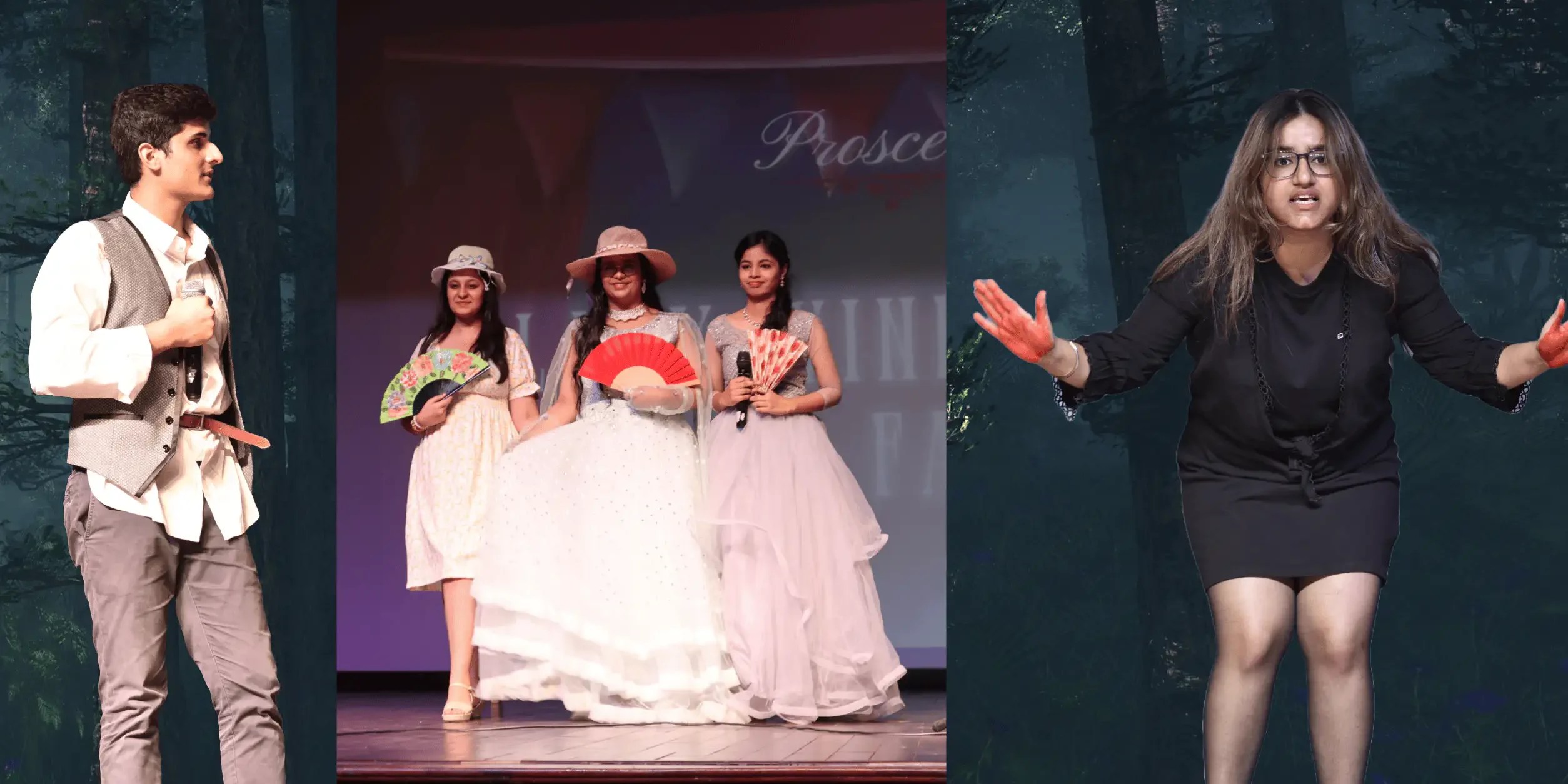
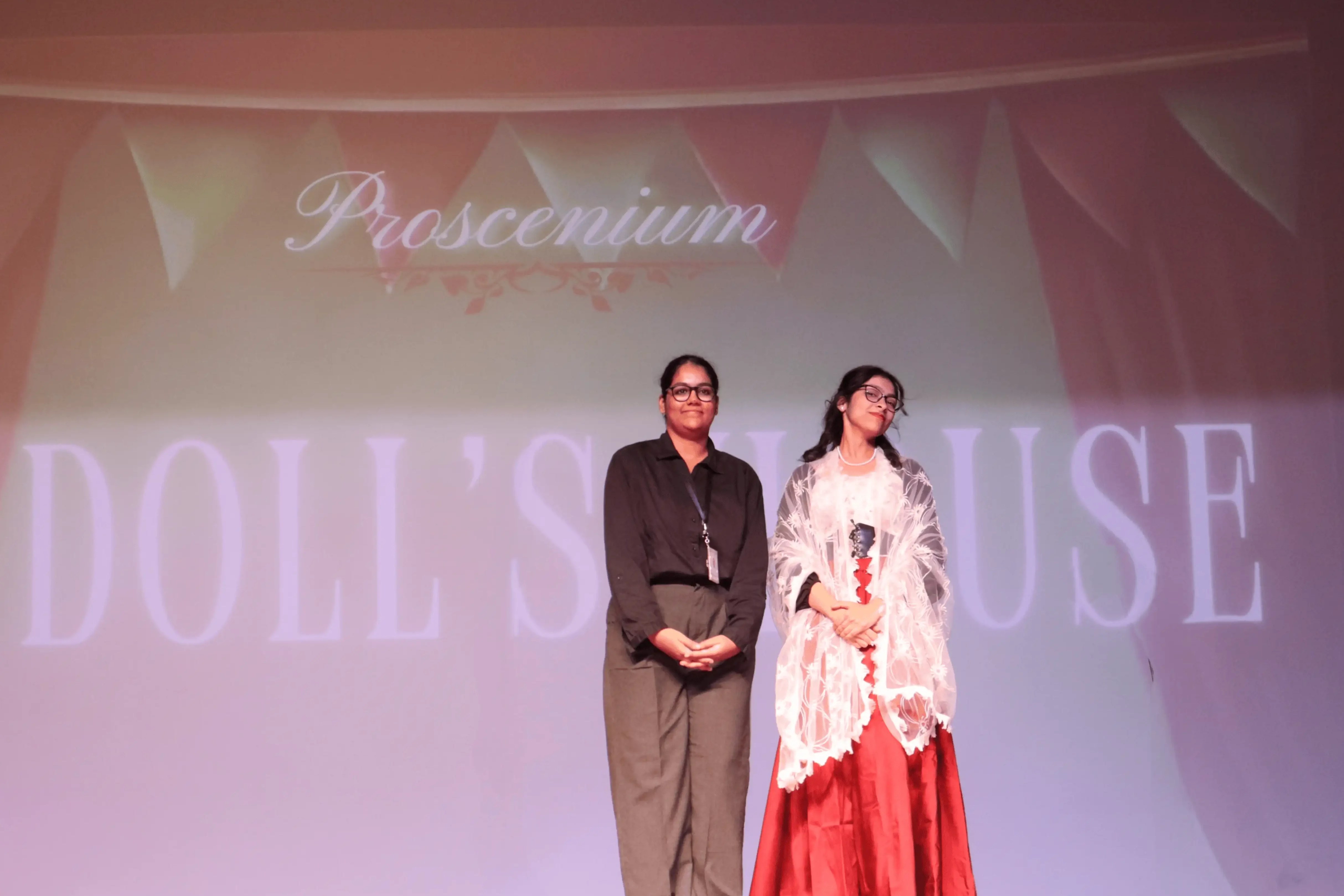
Acted plays become literature, and therefore retroactively, literary works become dramas to be enacted on stage, and it is the fact that theatre helps bring texts to life like never before is what inspired the Department of English of St. Xavier’s College Jaipur to organise the third edition of their annual theatre competition titled “Proscenium.” “Proscenium ‘24” took place in September and the show was put to stage after weeks’ worth of practice by the different groups of performers.
What started as a competition, evolved into a single production in its second year. Taken up by the students of the batch of ‘26, Antonio, Bassanio, Shylock, and Portia took the center stage in the portrayal of the Trial Scene from Merchant of Venice. The following year, was a return to form with students from all the classes, B.A. and M.A., forming groups, and taking part in the competition. The selections ranged in the form of Doctor Faustus, Lady Windermere’s Fan, As You Like It, etc.
The department of English has undertaken this humble initiative since the last three years to take learning beyond the classroom – as we are firm believers that theatre does make you learn. Literature and theatre go hand in hand. The former feeds the latter. Before novels even were a thing, theatre was the main form of storytelling for the masses. Ancient Greek literature, medieval morality plays, Shakespearean dramas – were how the people got their entertainment, and the plays penned down centuries ago are still being studied as works of literature.
But why does theatre grab our interests so much so that even after so many years later so much so that we are still reading and acting out the same dramas conceived years ago. Theatre has a habit of turning the mundane into a form of art. The glances, silences, fights, and arguments, all turn into emotional showcases that never fail to grasp our attention. Theatre zooms in on life with a pair of emotional binoculars. These emotions are not necessarily always the ones that we say out loud – rage, loneliness, jealousy, confusion – abstract feelings that are given a voice through the stage. Characters in plays are allowed to talk to themselves through monologues. They are allowed to rant their hearts out about stuff that we often keep bottled up.

Ever seen a play and found a character or their actions relatable? That is because theatre holds a mirror up, reflecting our insecurities, relationships, hopes, and failures. Sometimes itmight be subtle, the other, not too much. Other times, it presses pause and asks you to look in and face the emotions inside you – to connect with it. Theatre also holds up a mirror to the systems that surround us. The norms we accept, the culture and history we withhold are questioned time and time again by playwrights, making the invisible visible.
In essence, theatre, for English majors, is more than just performance. It is the living, breathing extension of everything we study. It takes the texts we read and brings them to life, a testament to how words don’t just exist on a page, but pulse with emotion. It gives context and meaning, when spoken aloud. It grabs the essence of everyday life and transforms it into a narrative that could be experienced in a myriad of ways.
For the individuals immersed in language, story, and the human experience, participating in theatre deepens interpretation, sharpens empathy, and turns literature into a body of truth. In the end it reminds us why we read in the first place.
It has always been our desire to understand what it is to be human, and theatre lets us live that understanding out loud.

 LITERATI SXCJ